Site-Built Compact Ranges - NSI-MI
Versatile Quiet Zone Sizes
Broad Frequency Coverage
Superior Quiet Zone Performance
Robust Payload Capacity
Precision Engineering
Multi-Application Capability
Flexible System Enhancements
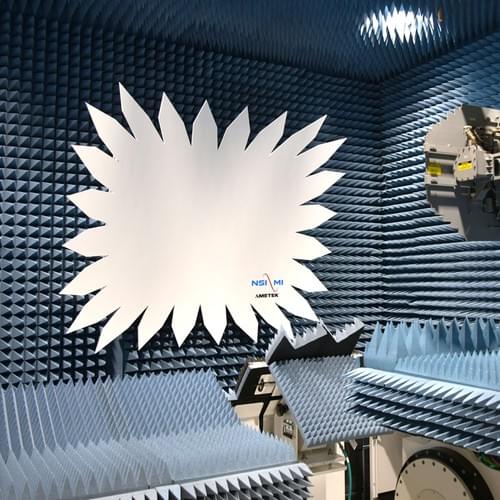
NSI-MI’s Small Compact Range Systems (CRS-CRC) deliver exceptional performance for testing directive antennas—offering a smarter alternative to traditional far-field and near-field ranges. Designed for indoor use, these systems require significantly less space than far-field ranges while maintaining, or even exceeding, their performance. This indoor capability also ensures greater test availability, free from weather-related delays or logistical constraints.
Unlike near-field systems, compact ranges streamline the testing process by eliminating the need to scan the entire antenna aperture to obtain a single far-field pattern cut. This results in faster, more efficient evaluations of antenna performance.
NSI-MI’s Medium Compact Range Systems (CRS-CSC / CRS-ESC) deliver exceptional performance for testing directive antennas—offering a smarter alternative to traditional far-field and near-field ranges. Designed for indoor use, these systems require significantly less space than far-field ranges while maintaining, or even exceeding, their performance. This indoor capability also ensures greater test availability, free from weather-related delays or logistical constraints.
Unlike near-field systems, compact ranges streamline the testing process by eliminating the need to scan the entire antenna aperture to obtain a single far-field pattern cut. This results in faster, more efficient evaluations of antenna performance.
NSI-MI’s Large Compact Range Systems (CRS-CRC / CRS-CSC / CRS-ESC) deliver exceptional performance for testing directive antennas—offering a smarter alternative to traditional far-field and near-field ranges. Designed for indoor use, these systems require significantly less space than far-field ranges while maintaining, or even exceeding, their performance. This indoor capability also ensures greater test availability, free from weather-related delays or logistical constraints.
Unlike near-field systems, compact ranges streamline the testing process by eliminating the need to scan the entire antenna aperture to obtain a single far-field pattern cut. This results in faster, more efficient evaluations of antenna performance.